
Minority Affairs Minister Kiren Rijiju announced that the deadline for registering Waqf properties on the UMEED portal will not be extended. However, those who attempted registration but could not complete it will be exempt from penalties for the next three months.

The national capital was in the grip of a cold wave, with the sun largely obscured by clouds and pollutants lingering in the atmosphere, leading to reduced visibility. At least 129 flights were cancelled at the Delhi airport on Saturday due to dense fog, according to an official.

A government doctor and his wife have been detained in Jammu and Kashmir for allegedly misusing their positions to mask unlawful activities, including radicalizing local women through social media.

Atiqa Mir seals highest qualifying spot by a female racer in COTFA series
Sources in the Fifteenth Finance Commission said that they will implement the provisions after the bill is enacted and the President makes a reference to it.
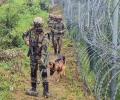
Security forces foiled an infiltration bid along the Line of Control (LoC) in the Gurez sector of Jammu and Kashmir's Bandipora district, resulting in the death of two terrorists.
The material, part of the 360 kilograms of explosives recovered from the rented residence of arrested doctor Muzammil Ganaie, was being sampled as part of the ongoing investigation, the officials said.
Suspected drones were observed along the International Border in Samba district of Jammu region on Monday, while armed forces downed a 'surveillance drone' in Punjab's Jalandhar district.

Punjab Police arrested three men from Jammu and Kashmir, uncovering a Jaish-e-Mohammad (JeM) linked terror module in connection with the murder of a cab driver. The accused confessed to the crime and the victim's body and the weapon used were recovered.
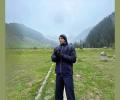
'Tourism will get hit. Thousands of lives will suffer. Businesses will shut down.'
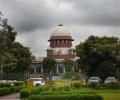
The Supreme Court is scheduled to hear a plea for the restoration of statehood to Jammu and Kashmir. The plea highlights the delay in restoration and its impact on democratic rights and development.

Haryana DGP O P Singh visited Al Falah University in Faridabad to investigate security lapses after the discovery of a terror module linked to the university. The investigation follows a blast near the Red Fort and the busting of a 'white-collar' terror module.
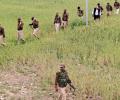
The bodies of a teenager and his two relatives were found near a waterfall in Jammu and Kashmir's Kathua district three days after they went missing. The Jammu and Kashmir Congress has demanded a high-level investigation into the incident. The police have ruled out any terror angle, but the exact cause of death is unknown and will be determined by a postmortem.
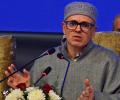
Former Chief Minister Omar Abdullah expresses dwindling hope for the restoration of statehood to Jammu and Kashmir, citing delays and governance challenges in the Union Territory setup.
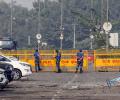
Officials reveal details of a foiled Jaish-e-Mohammed terror plot involving a doctor who planned a bomb blast near the Red Fort, timed around the Babri Masjid demolition anniversary. Arrests and investigations uncovered the interstate network.

Following the detention of medical student Mohammad Arif, allegedly due to his connection to Delhi blast suspect Dr Shaheen Saeed, his landlord, Kanhaiya Lal, stated that Arif had been staying there for less than a month and they did not find any of his activities suspicious.

Amir Rashid Ali, a key accused in the Red Fort area car bomb blast case, has been remanded in 10 days' NIA custody. The agency seeks to unravel the conspiracy behind the inter-state "white collar" terror module.
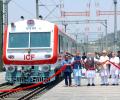
Sinha said the inauguration of the Kashmir rail service has connected the hearts of the people of Jammu and Kashmir with the rest of the country and will pave the way for the economic prosperity of the region.

Jaishankar said such a description would be like putting the perpetrator and the victim of the Pahalgam attack at the same level.

Sarfaraz Khan doesn't need India A exposure tours and series to play international cricket as the middle-order India batter can find his way back into the Test side with runs in domestic cricket, said India all-rounder Shardul Thakur on Friday.
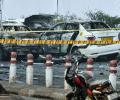
Doctors arrested in connection with the Red Fort blast allegedly raised over Rs 26 lakh to procure materials used in the explosion. The funds were used to purchase large quantities of fertilizer, a key component in Improvised Explosive Devices (IEDs).
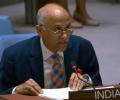
Asserting that democracy is an 'alien' concept for Pakistan, India has called upon Islamabad to end grave human rights violations in territories under its illegal occupation, where the population is in 'open revolt' against military occupation, repression, brutality and exploitation.
A woman doctor arrested in connection with an inter-state terror module was part of Jamaat-ul-Mominaat, an organization launched by Jaish-e-Mohammed, officials said.

The chief education officer (CEO) of Baramulla in Jammu and Kashmir directed teaching and non-teaching staff employed under the department to refrain from criticising government policies on social media, warning them of punitive action, including dismissal from service.
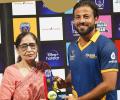
ISPL star Irfan Umair makes Ranji Trophy debut for Mumbai against Jammu and Kashmir

Kolkata Knight Riders splashed the cash as they spent a record breaking Rs 25.20 to buy Australian all-rounder Cameron Green.
He conveyed this during a telephonic conversation with US Secretary of State Marco Rubio, according to a statement posted by the state-run Pakistan Television on X.
'If Pakistan has fired one bullet at us then we have to respond by firing 10 bullets at them. It is our right to do so.'

A 32-year-old Delhi resident was allegedly duped of over Rs 9 lakh by a person posing as the chief of the Anti-Terrorism Squad (ATS) and accusing him of being involved in the Pulwama terror attack.

The Army Chief said India's political brass has the will to strengthen the country's deterrence capabilities.
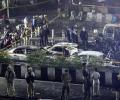
"Investigators are now tracing the route towards Daryaganj, while more than 100 CCTV clips, including footage from nearby toll plazas, are being examined to establish the complete movement of the vehicle," the sources added.

Modi will start his visit on June 6 by dedicating to public the Chenab rail bridge, which is a key part of the 272-km Udhampur-Srinagar-Baramulla railway link (USBRL) that will provide direct train connectivity to the valley.

Delhi Police have increased security measures across the city following the recovery of suspected ammonium nitrate and arms in Faridabad, Haryana. The heightened security includes increased surveillance at border points and sensitive zones.
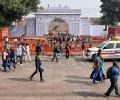
The sophisticated 'white-collar' terror module, spearheaded by a group of doctors recently busted by Jammu and Kashmir Police, had been actively scouting for a suicide bomber since last year, with key planner Dr Umar Nabi pushing the agenda, officials said on Sunday.

The SC has sought a response from the Centre on a plea seeking the restoration of statehood to Jammu and Kashmir.
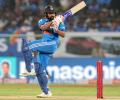
Senior pros Rohit Sharma and Virat Kohli made a grand comeback to the Vijay Hazare Trophy, smashing centuries on the opening day of the one-day tournament on Wednesday.

India has strongly criticized Pakistan for its human rights violations against protesters in Pakistan-Occupied Kashmir (PoK), citing systemic oppression and plundering of resources.

Police in Faridabad continue their investigation into a suspected terror module after a large quantity of explosives was found in rented rooms. The probe is also examining potential links to a recent blast near Delhi's Red Fort.
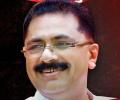
Jaleel made the remarks in a Facebook post regarding his visit to Kashmir.
A major breakthrough has been achieved in the Red Fort car blast case, with intelligence agencies uncovering a Rs 20 lakh fund trail linked to three doctors, Umar, Muzammil, and Shaheen.
